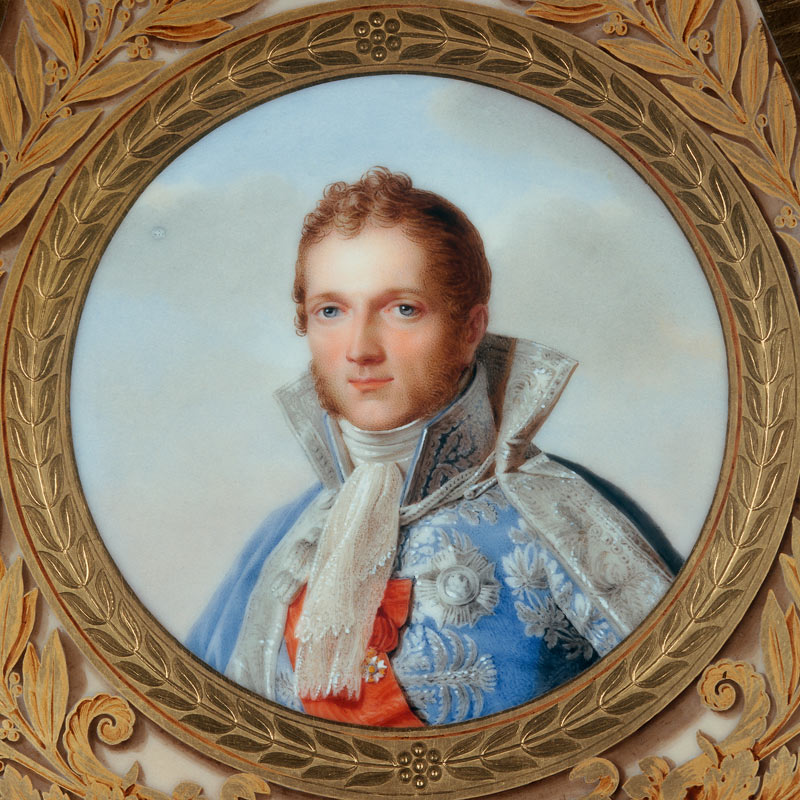
Armand-Augustin-Louis de Caulaincourt, Duke of Vicenza, spent June and July 1815 in Paris. He was a member of the Provisional Government that had taken over following Napoleon’s abdication on 22 June of that year, and he took part in the negotiations surrounding the surrender of the capital. It was around then that he spoke to some of the generals who had come back with Napoleon following Waterloo. This is his unpublished account of what they told him:
“The generals in his suite were speaking quite openly about the situation and even about the abdication of the Emperor, something which had been raised as early as at Philippeville. All agreed that by quitting the army he had ruined all hope for himself, and for France. They attributed the loss of the battle to Marshal Grouchy either to never having received. or having received too late, orders and so had not attacked General Bülow, who took advantage of this to join with the Duke of Wellington. As for the panic which gripped the army at the close of the day this is what they said: during the battle the Emperor saw a corps come up behind the right flank and he persisted in taking this to be Grouchy; it was a Prussian corps under Bülow and, when he saw his error, it was too late. What remained of two battalions of the Guard held out for some time under a terrible fire of musketry and canister gave way after losing all their officers with most of the soldiers falling back on four battalions of the Old Guard being held in reserve. The sight of these bearskins which, according to the expression of those present, had never before fled, giving way before an irresistible force was the beginning of the collapse. The right flank soon gave way before the Prussians and the anxiety this movement created turned to terror when the enemy was seen debouching onto the main road and taking position in the rear of the French army. This move triggered the cry of everyman for himself. All along the road they were running off to the right or to the left, making off across the fields. Any fresh reserves were too weak to contain this impulse and were first paralysed and then swept away by the torrent. The Emperor made a vain attempt to rally his soldiers but he suddenly found himself in the midst of this irresistible torrent, and in a way also swept away by it. Soon the entire army was in tatters and only at grave danger to one’s life could one push through the mass of fugitives, baggage, cavalry and artillery that encumbered the fields and the road. Darkness made things worse, and it was in the midst of this horrible confusion that what remained of the army entered Charleville [Charleroi].”